I’m a musician from Dublin, Ireland. I also do contract work as a computer music designer. Download and use anything you want from this site. Feel free to get in touch with questions! I also have A NEW BLOG!
Circum (after James Joyce)
(2022)
[8]
any instruments, performing from a projected animated score (originally: accordion, flute, percussion, soprano)
Circum (after James Joyce)
(2022) [8]any instruments, performing from a projected animated score (originally: accordion, flute, percussion, soprano)
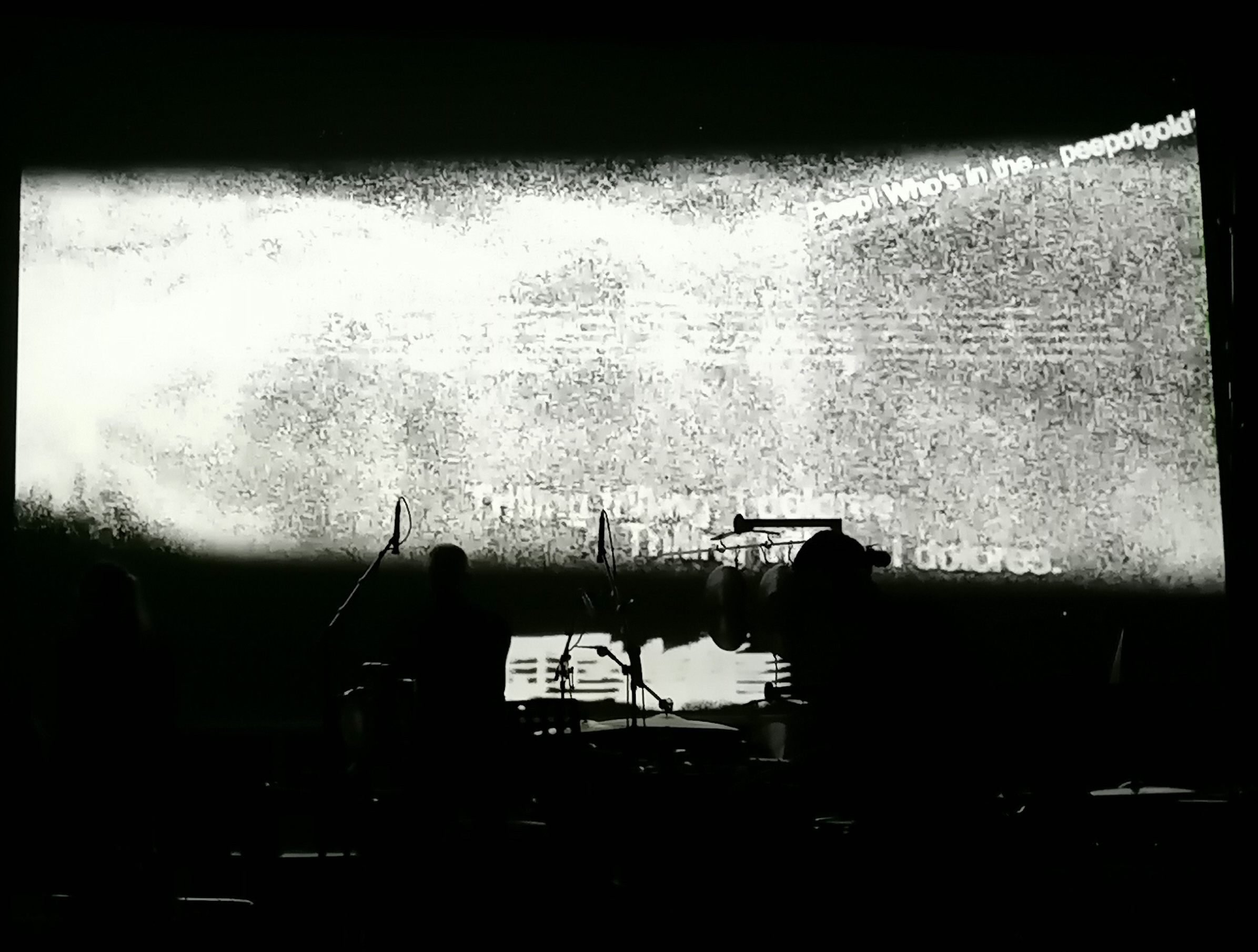
Circum is an experiment in creating a silent, animated score: the visual element is supposed to be visible both to the performers and the audience and it acts as the entire "text" for the performers. For the musicians, the video inspires them to create sound, generating a feedback loop where their actions are affected both by the video and the sonic choices they have already made. For the audience, however, sound and sight unfold simultaneously. Circum is also my first attempt as an Irish artist to get into the world of James Joyce - probably the most important Irish artist? My transitions, which sit between pieces focused on specific episodes of Ulysses, transverse the entire text (backwards) in several ways, treating Bloomsday like Groundhog Day. The animated score is made of text transformed algorithmically into music notation, both displayed using particle systems
Commissioned by: Between Feathers
[all] [chamber] [electronic] [instrumenty] [video]
Ceiliúradh [part 1] {alternate title: 2022.1}
(2022)
[9]
piano trio (violin, 'cello, piano)
Ceiliúradh [part 1] {alternate title: 2022.1}
(2022) [9]piano trio (violin, 'cello, piano)
trombone, transducer, tam-tam
(2021)
[5]
trombone, percussion (1 player; tam tam, hand-held transducer with small amplifier)
trombone, transducer, tam-tam
(2021) [5]trombone, percussion (1 player; tam tam, hand-held transducer with small amplifier)
2021.3 (for Mairéad Hickey)
(2021)
[5]
violin
2021.3 (for Mairéad Hickey)
(2021) [5]violin
2021.1
(2021)
[5]
piano
2021.1
(2021) [5]piano
Tide Quartet
(2020)
[90]
string quartet; violin, violin, viola, cello
Tide Quartet
(2020) [90]string quartet; violin, violin, viola, cello
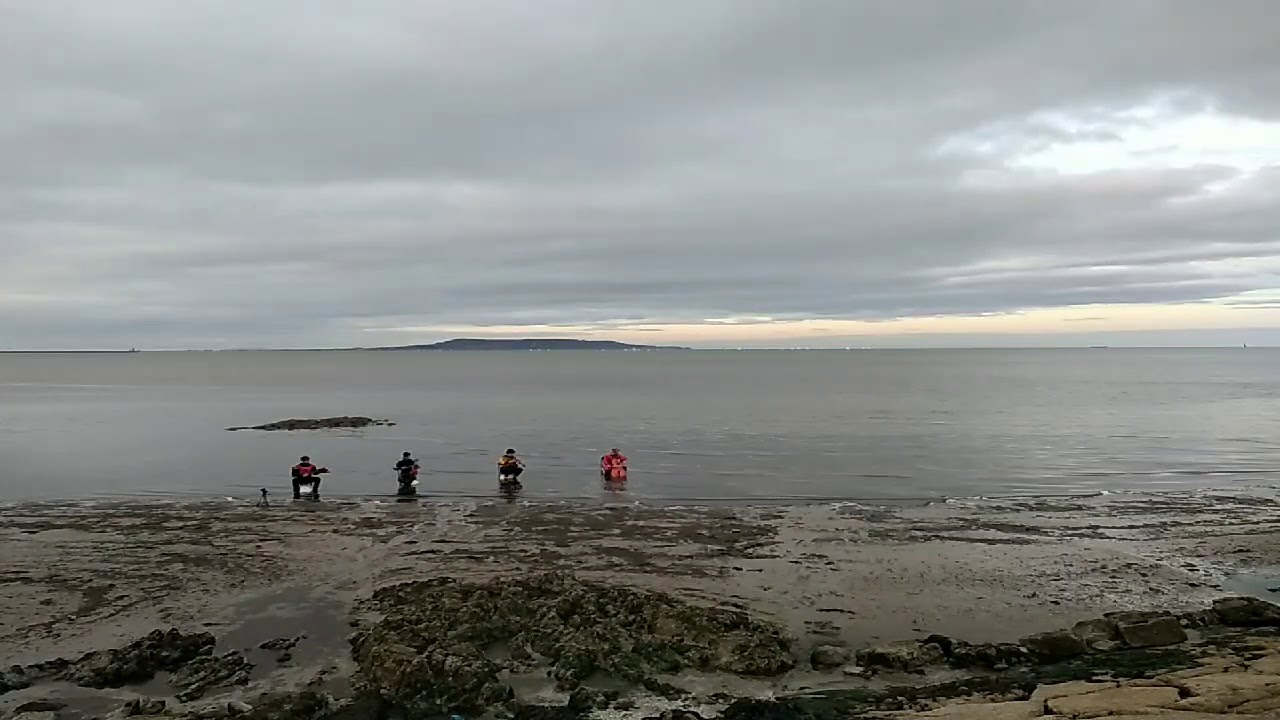
A string quartet dress in wet suits, sitting on chairs on the dry sea-bed in Dublin Bay. They perform a theme and variations (improvised from a set of instructions) as the tide begins to rush in around them. The performance ends for each musician only when the water reaches their neck, making it a durational piece reliant on the speed of the tide. Afterwards, the saturated instruments will be retrieved and the composer will attempt to save them by leaving them to dry naturally. This process will also be recorded and shown on this website. Unsalvageable parts will be repaired using driftwood, and the piece will be performed again next year.
2019.8
(2019)
string quartet; violin, violin, viola, cello
2019.8
(2019)string quartet; violin, violin, viola, cello
2019.7
(2019)
[7]
organ
2019.7
(2019) [7]organ
2019.6
(2019)
[7]
horn, electronics
2019.6
(2019) [7]horn, electronics
short quartet with improvised response
(2019)
[8]
string quartet; violin, violin, viola, cello
short quartet with improvised response
(2019) [8]string quartet; violin, violin, viola, cello
Dankgesang I
(2019)
[9]
any instrument(s), tape
Dankgesang I
(2019) [9]any instrument(s), tape
2018.5
(2018)
[6]
bassoon, cymbal [bassoon part works on low wind generally - contrabass clarinet, baritone saxophone, trombone etc.]
2018.5
(2018) [6]bassoon, cymbal [bassoon part works on low wind generally - contrabass clarinet, baritone saxophone, trombone etc.]
2018.4_c
(2018)
any instruments (first played by viol consort)
2018.4_c
(2018)any instruments (first played by viol consort)
2018.4_b
(2018)
any instruments (first played by viol consort)
2018.4_b
(2018)any instruments (first played by viol consort)
2018.4: in nomine
(2018)
[5]
four instruments or string quartet
2018.4: in nomine
(2018) [5]four instruments or string quartet
2018.3
(2018)
[6]
violin, cello
2018.3
(2018) [6]violin, cello
2018.2
(2018)
[18]
string orchestra
2018.2
(2018) [18]string orchestra
2018.1
(2018)
[20]
piano trio; violin, cello, piano
2018.1
(2018) [20]piano trio; violin, cello, piano
2017.5: Cimetière de Passy
(2017)
[5]
piano
2017.5: Cimetière de Passy
(2017) [5]piano
2017.4
(2017)
[12]
horn quartet; 4 Horns in F
2017.4
(2017) [12]horn quartet; 4 Horns in F
2017.2
(2017)
[2]
12 Trumpets in B flat, 6 Horns in F, 6 Tenor Trombones, 4 Bass Trombones, 2 Tubas
2017.2
(2017) [2]12 Trumpets in B flat, 6 Horns in F, 6 Tenor Trombones, 4 Bass Trombones, 2 Tubas
The Mother
(2017)
[4]
soprano, piano
The Mother
(2017) [4]soprano, piano
From Harry Patch
(2015)
[8]
horn
From Harry Patch
(2015) [8]horn
2016.4
(2016)
[4]
orchestra (2222 2000 0 strings)
2016.4
(2016) [4]orchestra (2222 2000 0 strings)
2015.2b
(2016)
[10]
string orchestra
2015.2b
(2016) [10]string orchestra
2016.3
(2016)
[7]
string quartet; violin, violin, viola, cello
2016.3
(2016) [7]string quartet; violin, violin, viola, cello
String Quartet No. 2
(2016)
[15]
string quartet; violin, violin, viola, cello
String Quartet No. 2
(2016) [15]string quartet; violin, violin, viola, cello
2016.2
(2016)
[12]
orchestra (2222 333 timps 3 hp pno strings)
2016.2
(2016) [12]orchestra (2222 333 timps 3 hp pno strings)
2016.1 - Two 1916 Pieces
(2016)
[5]
piano
2016.1 - Two 1916 Pieces
(2016) [5]piano
Adam Lay yBounden
(2015)
[3]
choir (SATB)
Adam Lay yBounden
(2015) [3]choir (SATB)
2015.4b
(2015)
[5]
flute, clarinet
2015.4b
(2015) [5]flute, clarinet
2015.4
(2015)
[5]
treble recorder, clarinet in Bb
2015.4
(2015) [5]treble recorder, clarinet in Bb
2015.3
(2015)
[8]
flute
2015.3
(2015) [8]flute
Harry Patch
(2015)
[60]
flute, horn, cello, piano, tape
Harry Patch
(2015) [60]flute, horn, cello, piano, tape
2015.2
(2015)
[9]
string quartet; violin, violin, viola, cello
2015.2
(2015) [9]string quartet; violin, violin, viola, cello
2014.5
(2014)
[9]
large ensemble; flute, clarinet in Bb, trombone, violin, viola, cello, doublebass, electric guitar, marimba, piano
2014.5
(2014) [9]large ensemble; flute, clarinet in Bb, trombone, violin, viola, cello, doublebass, electric guitar, marimba, piano
2014.4: Siege of Wexford
(2014)
[5]
piano
2014.4: Siege of Wexford
(2014) [5]piano
Symphony No. 1
(2014)
[75]
orchestra (2222 220 timps strings)
Symphony No. 1
(2014) [75]orchestra (2222 220 timps strings)
2014.1
(2014)
[3]
bass clarinet
2014.1
(2014) [3]bass clarinet
2013.9
(2013)
[25]
orchestra (2222 220 timps strings)
2013.9
(2013) [25]orchestra (2222 220 timps strings)
2013.8
(2013)
[13]
piano trio; violin, cello, piano
2013.8
(2013) [13]piano trio; violin, cello, piano
Nachtmusik
(2013)
[8]
cello
Nachtmusik
(2013) [8]cello
2013.6
(2013)
[10]
orchestra (3333 433 timps 2 hp strings)
2013.6
(2013) [10]orchestra (3333 433 timps 2 hp strings)
Work for Organ
(2013)
[15]
organ
Work for Organ
(2013) [15]organ
CrowdScoreSing
(2013)
[8]
violin, cello, flute, horn, trumpet, percussion (glockenspiel, cow, piano, three actors
CrowdScoreSing
(2013) [8]violin, cello, flute, horn, trumpet, percussion (glockenspiel, cow, piano, three actors
CrowdScoreSing is a piece based on suggestions which were
made via Facebook comments over a forty-eight hour period
in early 2013. The concept required that I would incorporate
all practical suggestions into the piece. And I have.
Rite of Spring: Introduction
(2013)
[4]
violin, viola, cello (string trio)
Rite of Spring: Introduction
(2013) [4]violin, viola, cello (string trio)
Song for Hilda
(2013)
[4]
piano, high voice, high voice
Song for Hilda
(2013) [4]piano, high voice, high voice
One
(2013)
[20]
viola, live electronics
One
(2013) [20]viola, live electronics
Work for Quartet
(2012)
[8]
violin, viola, cello, doublebass
Work for Quartet
(2012) [8]violin, viola, cello, doublebass
Tweet Piece (#2)
(2012)
[8]
guitar, fixed media electronics
Tweet Piece (#2)
(2012) [8]guitar, fixed media electronics
piece for guitar and tape. Tape part is layered guitar + a pre-recorded voice part composed of tweets and public Facebook posts taken without permission c. 2012. Read by Andrew Donovan
note from then below:
Tweet Piece (#2) was written in response to a request from Anna Murray to write a piece for guitar and tape to help her fill a concert from her newly formed Fractal group.
I had initially declined her request as I was not particularly interested in writing for guitar and tape, but when she came back to me a couple of months later the project suddenly grabbed my attention.
The key motivation behind this piece is an attempt to comment on the nature of privacy in our socially networked twenty-first century world. The spoken word element of the piece is composed entirely from statuses posted publicly (ie available to anyone, and not just their friends) on Facebook and Twitter. This information has all been put into the public domain with the consent of the creator: The fact that I took it without their knowledge and that many of them would doubtless be offended if they realised is exactly the point I am trying to make. Countless people, myself included, are putting out this information without any thought for what might happen to it, and what kind of moral-free reprobate might get their hands on it. The spoken word track was spoken brilliantly by Andrew Donovan, in just two takes.
One of the things I paid great attention to while writing this piece was applying the structure of the music to the text of the spoken word track, and vice versa. I will explain the musical structure first.
This piece is in an arch-shaped sonata form (with a palindromic central section and a three key exposition), and also uses my chopped process system (pioneered in my Work for Harpsichord). The chopped process system works whereby motifs are developed according to a process outside the piece, and then snippets of this process are pasted in to the piece, achieving the logical-sounding aural effect of algorithmic composition, with the bonus of only being able to use the bits that sound good.
The palindromic section of the piece is at the harmonic far-off point, and its palindromic nature mirrors the arch shape of the music around it. The chopped processes (one for each of the eight basic motifs used in the piece) are arch-shaped as well: Each one heads for a far-off point and then back towards its origin. The reason this is important will become clear when I explain the organisation of text.
Sonata Form in Tweet Piece (#2): (NB: this doesn't work without word's formatting but whatever)
Three Key Exposition Development Recapitulation CODA
E C (B#) B B> F# A G G# Bb C F D# C# D C >B E E
first second third 1 3 1 3 2 1 3 2 1 2 3 1[312 ()2] 1 3 2 1 3 2 1 2 1 1 3 2 3 3 1 2 1 1 2 3 layers
motivic group FOP
At C, the chopped processes, as well as the sonata form, have reached their far-off point (ie the motifs are as far away from the original ‘tonic’ versions of the motifs as they can get). At this point, we enter the palindromic cadenza, which is based on freely developed material not related to the basic motifs (the only passage of free material in the piece). This cadenza is heard over a particularly insane and lengthy facebook status which I really enjoy...
The harmonic movement of the piece can be easily followed by the ‘bassline’ a simple subtractive gesture which is announced by the guitar in bar one and heard in the tape part throughout the piece except for underneath the cadenza. This bassline (which also follows a chopped process) changes key very crudely at each point of modulation.
And now to the ‘tweets’: I thought it essential that the spoken word content was in some way closely linked to the musical content. To do this I needed it to somehow develop throughout the piece, and then to gradually work its way home. The solution I came up with was to divide the statuses I had harvested from Facebook and Twitter into three groups by subject matter. I gave each group two extremes of theme, and then ordered each snippet on a scale between these two extremes, creating gradual progression from one to the other.
I now had three subject groups of spoken material to go alongside the three groups of motivic material. The next step was the important one: Each motivic group could only be used when its corresponding spoken word group was present in the track. To make it more obvious what I mean, here are the three groups: First motivic group (tonic: Self-obsessed observations, FOP: Funny observations), second motivic group (tonic: Sad statuses, FOP: angry statuses), third motivic group (tonic: Subtle advertising in facebook posts, FOP: Overt advertising).
As will hopefully be clear from the above, what I ended up with was a piece where both the spoken word element and the musical material would begin in a tonic (key/mood/basic presentation of motif), move gradually towards the central far off point and then reverse and move on a different trajectory back towards home, eventually coming full circle.
One other important consideration was that the only way I could compose this piece was by waiting until I had recorded the spoken word track before actually writing the guitar part, as only then would I know how long I needed for each motif. In this way, also, the guitar and spoken word are inextricably linked.
Sebastian Adams, May 2013
Rhythm Study No. 3 (Hommage á J.S)
(2012)
[6]
piano
Rhythm Study No. 3 (Hommage á J.S)
(2012) [6]piano
Bagatelle for Youth Orchestra
(2012)
[3]
orchestra of young people
Bagatelle for Youth Orchestra
(2012) [3]orchestra of young people
Work for Piano Trio
(2012)
[8]
piano trio; violin, cello, piano
Work for Piano Trio
(2012) [8]piano trio; violin, cello, piano
Work for Harpsichord
(2012)
[10]
harpsichord
Work for Harpsichord
(2012) [10]harpsichord
adenosine and adrenaline
(2012)
violin
adenosine and adrenaline
(2012)violin
Prayer for four hands
(2012)
[10]
piano four hands
Prayer for four hands
(2012) [10]piano four hands
For a String Orchestra
(2012)
[10]
string orchestra [4 4 2 2 1]
For a String Orchestra
(2012) [10]string orchestra [4 4 2 2 1]
Work for viola, marimba and piano
(2011)
[8]
viola, marimba, piano
Work for viola, marimba and piano
(2011) [8]viola, marimba, piano
Work for Quintet
(2011)
[8]
flute, clarinet, violin, viola, piano
Work for Quintet
(2011) [8]flute, clarinet, violin, viola, piano
Larghetto
(2011)
[4]
clarinet
Larghetto
(2011) [4]clarinet
Prelude: Ave Maria
(2011)
[4]
piano
Prelude: Ave Maria
(2011) [4]piano
Quadrilateral
(2011)
[7]
soprano, saxophone, trumpet, double bass, drum kit
Quadrilateral
(2011) [7]soprano, saxophone, trumpet, double bass, drum kit
Work in Fifths and Thirds
(2011)
[8]
flute, piano
Work in Fifths and Thirds
(2011) [8]flute, piano
Piano Sonata No. 1
(2011)
[13]
piano
Piano Sonata No. 1
(2011) [13]piano
Miniature for Cello and Piano
(2011)
[6]
cello, piano
Miniature for Cello and Piano
(2011) [6]cello, piano
Evinescence
(2011)
[6]
accordion, fixed media electronics
Evinescence
(2011) [6]accordion, fixed media electronics
Swell
(2011)
[6]
string quartet; violin, violin, viola, cello
Swell
(2011) [6]string quartet; violin, violin, viola, cello
String Quartet No. 1
(2011)
[10]
string quartet; violin, violin, viola, cello
String Quartet No. 1
(2011) [10]string quartet; violin, violin, viola, cello
Kammerskizze
(2011)
[8]
clarinet, violin, cello, electric guitar, accordion
Kammerskizze
(2011) [8]clarinet, violin, cello, electric guitar, accordion
Mirrors and Reflections
(2010)
[5]
viola, fixed media electronics
Mirrors and Reflections
(2010) [5]viola, fixed media electronics
Obsession
(2010)
[8]
piano
Obsession
(2010) [8]piano
Madam Dial Was Livid
(2010)
[4]
organ
Madam Dial Was Livid
(2010) [4]organ