I’m a musician from Dublin, Ireland. I also do contract work as a computer music designer. Download and use anything you want from this site. Feel free to get in touch with questions! I also have A NEW BLOG!
[Web]Radio Music
(2026)
[6]
web installation (realisation of John Cage's Radio Music)
[Web]Radio Music
(2026) [6]web installation (realisation of John Cage's Radio Music)
![Cover image for [Web]Radio Music](/media/work_covers/Screenshot_2026-05-30_at_18.34.40.png)
This is a realisation of John Cage's famous piece Radio Music, using the score to play back from a list of web radio stations rather than the originally intended AM hectohertz (!!) frequencies. The list of stations is one I found somewhere online, and I have not filtered or re-ordered it other than to include only French and Irish stations, so as to preserve the indeterminacy that comes with attempting to find specific frequencies on a real radio.
Another approach to digitising this piece is detailed in a paper by Lindsay Vickery (in that case, adapting it for use with DAB radio signals). Vickery's interpretation of the score's instructions is quite different to mine (I read it as intending you to stay on the notated frequency at the radio's maximum volume, so that is what I have programmed)
Soave sia il vento (coda from Tense Systems)
(2021)
[4]
single-channel video; found footage and audio
Soave sia il vento (coda from Tense Systems)
(2021) [4]single-channel video; found footage and audio
Singing Hollow
(2025)
[240]
A performance installation for church bells (method ringers), organ, and walking instruments. Designed around St Audoen's Church, Dublin but adaptable to new spaces. Two computers required.
Singing Hollow
(2025) [240]A performance installation for church bells (method ringers), organ, and walking instruments. Designed around St Audoen's Church, Dublin but adaptable to new spaces. Two computers required.
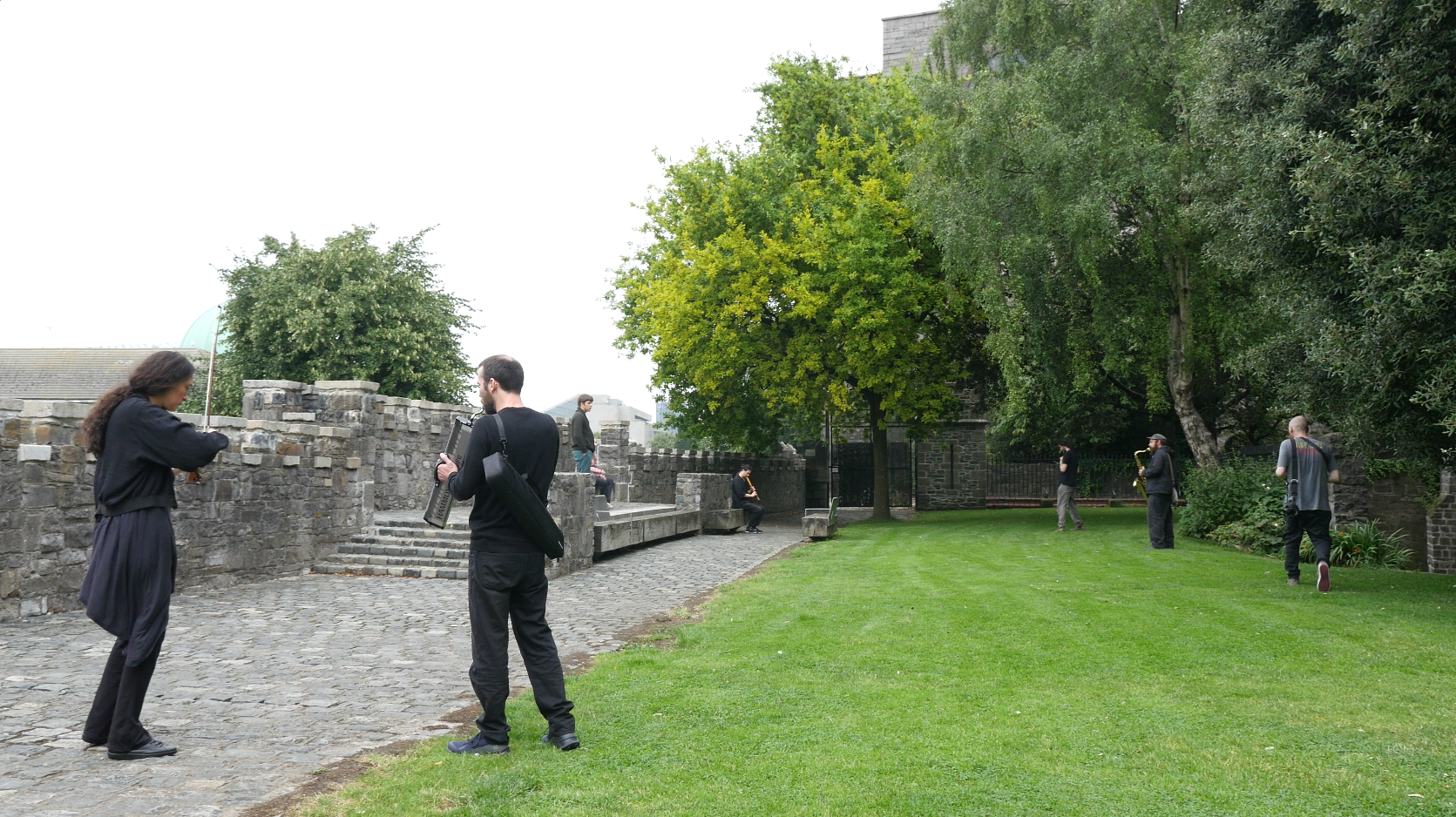
The linked website includes documentation, a web-based score and much more detailed information about the piece.
The Singing Hollow sculpture in St Audoen's Park invites visitors to put their heads into a hole inside a rock. It creates an acoustic transformation reminiscent of the feeling of sanctuary from the outside world that comes when you walk into a church. This inspired this live sound installation: organ plays inside the church, musicians play in the grounds, and church bells bridge both worlds, all playing parts that are both independent and interdependent.
In the original performance, the piece is designed for four outdoor instruments, six church bells (each one rung by an individual) and an organ. It was specifically written for St Audoen’s Church of Ireland, which is an incredibly old church.
Commissioned by: The Office of Public Works and The Liberties Festival
[all] [chamber] [generative] [installation] [software] [improvisation] [gig] [web] [fluxusy]
Traffic Piece
(2025)
[840]
durational installation (14 hours) for multiple groups of instruments, video, audio and live traffic; devoted to Unit 44!
Traffic Piece
(2025) [840]durational installation (14 hours) for multiple groups of instruments, video, audio and live traffic; devoted to Unit 44!
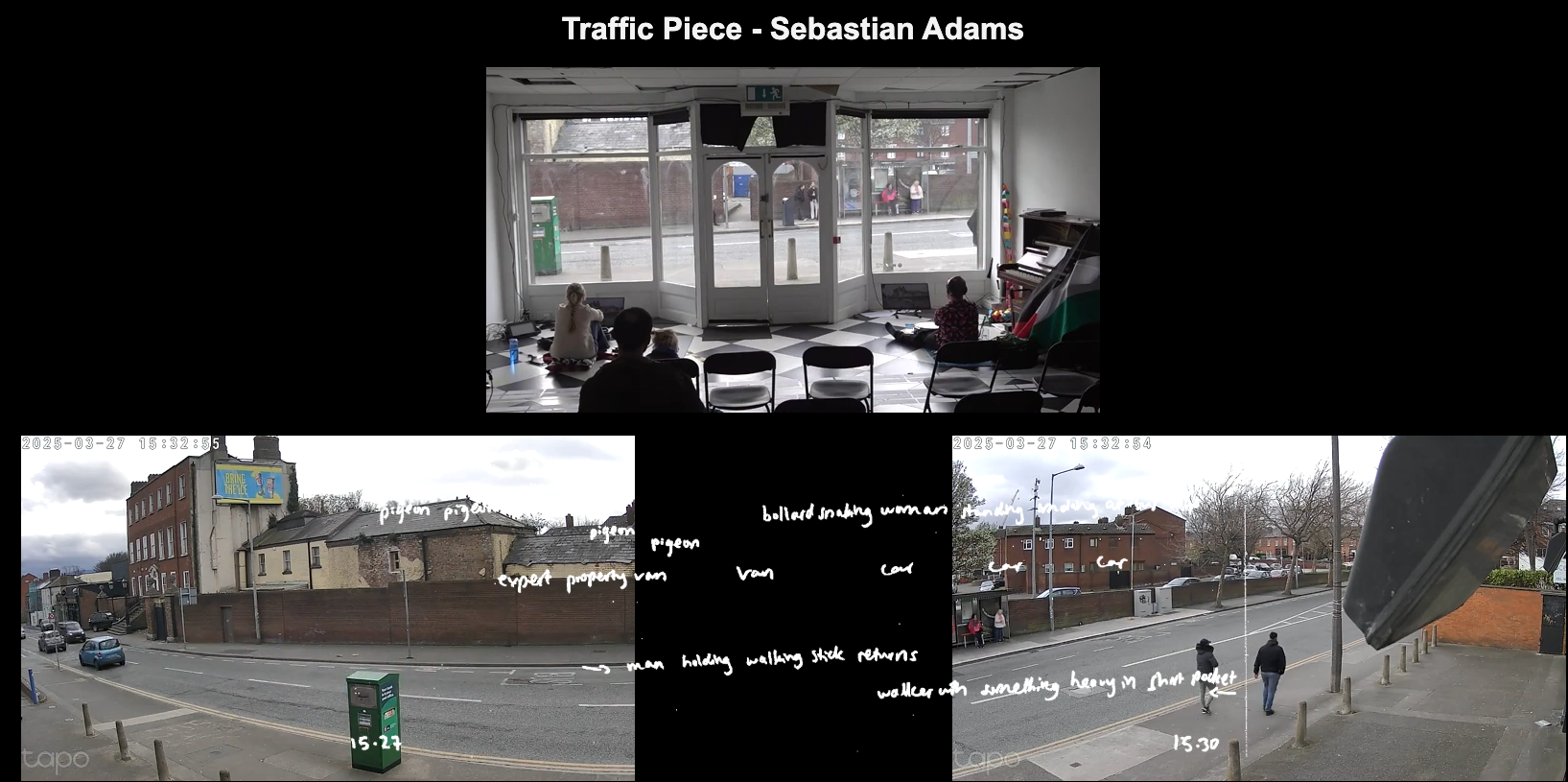
Presented here in a web installation version that locks the viewer to the specific moment from the performance corresponding to the current time of day.
Traffic Piece was created as a goodbye to Unit 44, a venue Kirkos ran which was heavily impacted by traffic sound. It ran from rush hour in the morning to rush hour at night. I got the idea for this piece during a beautiful saxophone performance by Josten Myburgh where his barely audible multiphonics fought for attention with the traffic outside in a way that really captivated me. After four years watching the traffic pass Unit 44, I thought sitting down and really listening to it would be the perfect way to say goodbye to the venue.
A bunch of the performers who contributed a lot to Unit 44 played a 14-hour long score (working in shifts) made from a full week of security cam footage of the street outside Unit 44, while they and the audience also watched the traffic in real life.
These different time cycles (moment to moment, rush hour to rush hour, Monday to Sunday) will mingle with pitch material derived from the resonances of Unit 44 itself to influence a ritualistic performance which is fully about the specific place that Unit 44 is and has been, and about the way the outside world has spilled into it.
The piece finished with a guided improvisation using the traffic as a score, open to all.
06:30 - 08:10 Shift 1: Sebastian Adams and Tom Roseingrave
08:10 - 8:30: traffic only
08:30 - 10:10: Shift 2: David Bremner and Sharon Phelan
10:10 - 10:30: traffic only
10:30 - 12:30: Shift 3: Aonghus McEvoy, Susan Geaney, David Lacey, Nick Roth
12:10 - 12:30: traffic only
12:30 - 14:10: Beethoven Freeze: Sebastian Adams and Robert Coleman
14.10 - 14.30: traffic only
14:30 - 16:10: Shift 5: Kevin Free and Jane Hackett
16:10 - 16:30: traffic only
16:30 - 18:00: in nomine: Sebastian Adams, Hannah Miller, Caitríona O'Mahony
18:00 - 18:30: traffic only
18:30 until the traffic ceases: Shift 7: open improv jam (all welcome)
Joan Somers Donnelly made a parallel performance taking notes on the passing traffic almost all day
Beginner's Guide to Slow Travel (co-composed by Kirkos)
(2023)
[60]
concert piece with slow travel, devised by Kirkos (horn, violin, cello, viola, melodica, chairs)
Beginner's Guide to Slow Travel (co-composed by Kirkos)
(2023) [60]concert piece with slow travel, devised by Kirkos (horn, violin, cello, viola, melodica, chairs)
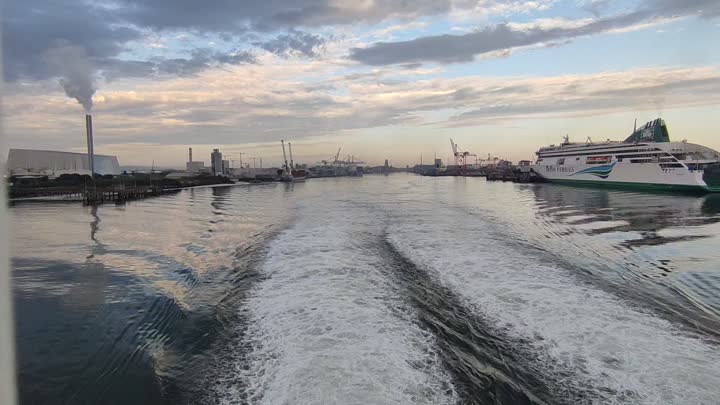
Beginner’s Guide To Slow Travel is a devised piece composed collaboratively by Sebastian Adams (1991), Robert Coleman (1989), Yseult Cooper Stockdale (1991), Jane Hackett (1991), Hannah Miller (1994) and Joan Somers Donnelly (1991).
How can we craft new ways to navigate the world as the tangible impact of anthropogenic climate change accelerates? One of the huge challenges for music will be adapting to a world where air travel no longer seems justifiable. Dublin-based new music group Kirkos have taken the logistics of their slow travel to Huddersfield, with the extra time, expense and change of internal rhythm it necessitates, as a starting point for this new devised piece. From there, the adventurous experimentalists leap into a sonic and spatial exploration of collecting and reusing, rest, energy transfer, interspecies entanglement and collective grief.
Additional elements of this piece, including artistic documentation of the journey to the festival, will gradually become available at www.kirkosensemble.com/beginners-guide in the lead-up to the festival.
Commissioned by: Commissioned by New Music Dublin, Huddersfield Contemporary Music Festival and Sound Scotland; supported by Culture Ireland and PRS Foundation Beyond Borders
[all] [chamber] [improvisation] [collaboration] [fluxusy]
YouChoose
(2023)
a prototype for using superimposed YouTube videos as a live graphic score. never performed/finished!
YouChoose
(2023)a prototype for using superimposed YouTube videos as a live graphic score. never performed/finished!

Fluxkit Transcriptions
(2024)
open instrumentation, including typist (premiere: flute, horn, keyboard, cello, typist)
Fluxkit Transcriptions
(2024)open instrumentation, including typist (premiere: flute, horn, keyboard, cello, typist)
A typist transcribes texts contained in a Fluxkit into musical notation, which is displayed to performers (and audience). The music notation, along with the typed text, is then used as a framework for improvising by a group of performers.
To play this piece, you also need to get or make a Fluxkit. A Fluxkit is a collection of event scores stored in a container (e.g. Water Yam by George Brecht). I made the piece with the Fluxkits Kirkos created in 2016 in mind, and used one of these to play the premiere. If you don’t have access to a Fluxkit, you could make one, for example by cutting up parts of the Fluxus Workbook (freely available online e.g. on the Monoskop website) and placing them in a box.
The first performance of this piece was played by Lina Andonovska, Hannah Miller, Adam Collins and Yseult Cooper Stockdale (as Kirkos) on 25.06.24 as part of an Irish Composers’ Collective concert in Unit 44, Dublin. I was the typist for the performance.
The software used for this performance (ChatMusic) is currently only available by request. Please get in touch if you're interested.
Quartet for viola and three radios
live viola, three radios, three transmitters, multi-channel playback and a microphone
Quartet for viola and three radios
live viola, three radios, three transmitters, multi-channel playback and a microphone
[VIEW TEXT SCORE]
Three radios are set up at the very beginning of the piece but playing only silence. Each is tuned to a different radio station. The radios are set up in a line with a space between them, with the viola player standing in the fourth position in the line.
The three radio stations correspond to the frequencies of three low-powered radio transmitters placed in the venue. Each is connected to a channel of the multi-channel playback device.
A microphone is unobtrusively placed in the space and begins recording when the viola player starts playing.
After a certain amount of time, the first radio starts playing back the recording.
After two more periods of time, the remaining radios also join in, so a canon accumulates.
So far, I've only performed this once and the performance officially "failed" - because I forgot to sit beside the microphone, meaning it only picked up a very, very quiet signal. Once I realised, I was forced to play very quietly to compete with it (which then made the later parts of the canon even more quiet), The YouTube clip here is from that performance - it was somehow a nice effect even though my idea didn't work at all
I think the piece has legs though!
timetravel webradio
(2023)
web installation (playback of web radio)
timetravel webradio
(2023)web installation (playback of web radio)
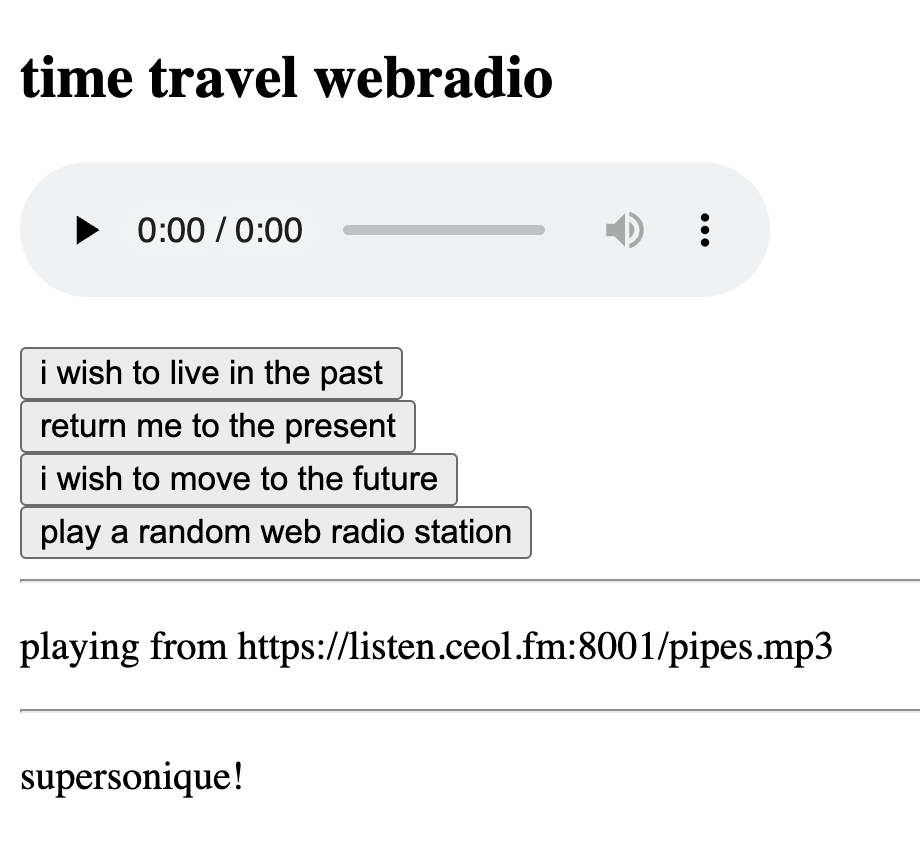
A huge selection of digital radio stations from Ireland and France are randomised, and you can go back in time (by playing them slower: the longer you listen to it like this, the further away you are from the real-time radio stream) or forwards in time: unlike a real radio station, digital radio often relies on file streams - so even when something hasn't happened yet you can often fast-forward through them.
Stolen Music
(2022)
[10]
fixed-media multi-channel video, diffused stereo sound, printed text materials, audience members with kazoos, interactive website and live narration
Stolen Music
(2022) [10]fixed-media multi-channel video, diffused stereo sound, printed text materials, audience members with kazoos, interactive website and live narration
Stolen Music was originally conceived for my final project as part of the IRCAM Cursus, but it is also an ongoing musical world-building project composed of websites, audio collages, acts of piracy etc.
The basic aim of the project is to explore two main ideas that matter to me:
Examining the boundaries of a "piece" of music: questioning the idea of the sole author and finding ways to subvert the linear, sectional timeline of a typical musical performance
Presenting an argument that all musical material should be fair game for all people to work with, regardless of who owns it under current copyright law.
This project owes a huge debt to Claudia Jane Scroccaro, the other teachers at IRCAM, and my colleagues from my course who let me mess with their music. Much more info is available on the dedicated website.
Freed Sounds Instrument
(2022)
audience with internet-connected mobile phones
Freed Sounds Instrument
(2022)audience with internet-connected mobile phones
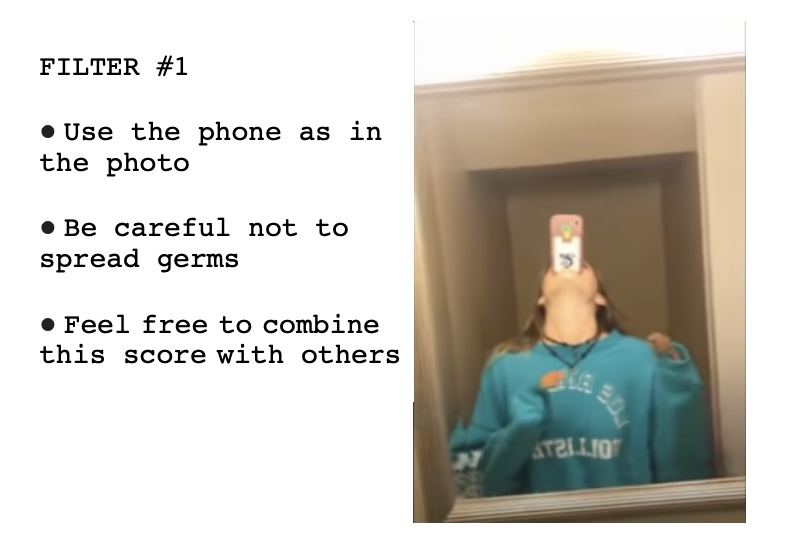
An instrument for playing with samples from freesound.org, with a set of accompanying text scores that can be used to process your performance of this. Suitable for performance in a group using mobile phones as loudspeakers.
500 Minutes of Music for Microtonal Piano
(2022)
[500]
piano or MIDI piano
500 Minutes of Music for Microtonal Piano
(2022) [500]piano or MIDI piano
Viola Transcription of 'Failing: a Very Difficult Piece for Solo String Bass' by Tom Johnson
(2021)
[10]
Viola Transcription of 'Failing: a Very Difficult Piece for Solo String Bass' by Tom Johnson
(2021) [10][VIEW TEXT SCORE]
How to Build a VIOLIN in TWENTY MINUTES Tutorial
(2021)
[20]
open instrumentation, designed for audience performance
How to Build a VIOLIN in TWENTY MINUTES Tutorial
(2021) [20]open instrumentation, designed for audience performance
Tide Quartet
(2020)
[90]
string quartet; violin, violin, viola, cello
Tide Quartet
(2020) [90]string quartet; violin, violin, viola, cello
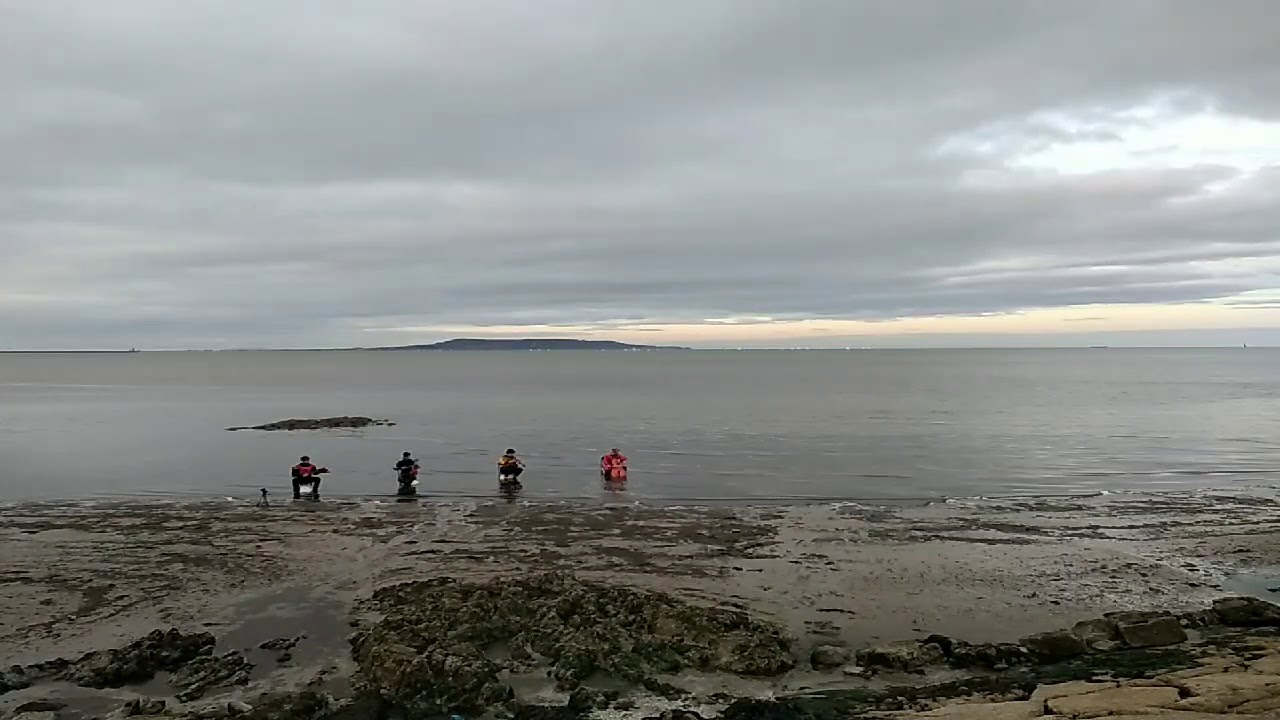
A string quartet dress in wet suits, sitting on chairs on the dry sea-bed in Dublin Bay. They perform a theme and variations (improvised from a set of instructions) as the tide begins to rush in around them. The performance ends for each musician only when the water reaches their neck, making it a durational piece reliant on the speed of the tide. Afterwards, the saturated instruments will be retrieved and the composer will attempt to save them by leaving them to dry naturally. This process will also be recorded and shown on this website. Unsalvageable parts will be repaired using driftwood, and the piece will be performed again next year.
Breath play [WIP]
(2020)
viola
Breath play [WIP]
(2020)viola
[VIEW TEXT SCORE]
2019.8
(2019)
string quartet; violin, violin, viola, cello
2019.8
(2019)string quartet; violin, violin, viola, cello
Portrait Piece
(2019)
event score
Portrait Piece
(2019)event score
[VIEW TEXT SCORE]
Masturbate Piece
(2019)
event score
Masturbate Piece
(2019)event score
[VIEW TEXT SCORE]
short quartet with improvised response
(2019)
[8]
string quartet; violin, violin, viola, cello
short quartet with improvised response
(2019) [8]string quartet; violin, violin, viola, cello
Omegle Piece
(2019)
event score
Omegle Piece
(2019)event score
[VIEW TEXT SCORE]
Weight Piece
(2018)
event score
Weight Piece
(2018)event score
[VIEW TEXT SCORE]
2018.5
(2018)
[6]
bassoon, cymbal [bassoon part works on low wind generally - contrabass clarinet, baritone saxophone, trombone etc.]
2018.5
(2018) [6]bassoon, cymbal [bassoon part works on low wind generally - contrabass clarinet, baritone saxophone, trombone etc.]
2018.4_c
(2018)
any instruments (first played by viol consort)
2018.4_c
(2018)any instruments (first played by viol consort)
2018.4_b
(2018)
any instruments (first played by viol consort)
2018.4_b
(2018)any instruments (first played by viol consort)
CrowdScoreSing
(2013)
[8]
violin, cello, flute, horn, trumpet, percussion (glockenspiel, cow, piano, three actors
CrowdScoreSing
(2013) [8]violin, cello, flute, horn, trumpet, percussion (glockenspiel, cow, piano, three actors
CrowdScoreSing is a piece based on suggestions which were
made via Facebook comments over a forty-eight hour period
in early 2013. The concept required that I would incorporate
all practical suggestions into the piece. And I have.
Tweet Piece (#2)
(2012)
[8]
guitar, fixed media electronics
Tweet Piece (#2)
(2012) [8]guitar, fixed media electronics
piece for guitar and tape. Tape part is layered guitar + a pre-recorded voice part composed of tweets and public Facebook posts taken without permission c. 2012. Read by Andrew Donovan
note from then below:
Tweet Piece (#2) was written in response to a request from Anna Murray to write a piece for guitar and tape to help her fill a concert from her newly formed Fractal group.
I had initially declined her request as I was not particularly interested in writing for guitar and tape, but when she came back to me a couple of months later the project suddenly grabbed my attention.
The key motivation behind this piece is an attempt to comment on the nature of privacy in our socially networked twenty-first century world. The spoken word element of the piece is composed entirely from statuses posted publicly (ie available to anyone, and not just their friends) on Facebook and Twitter. This information has all been put into the public domain with the consent of the creator: The fact that I took it without their knowledge and that many of them would doubtless be offended if they realised is exactly the point I am trying to make. Countless people, myself included, are putting out this information without any thought for what might happen to it, and what kind of moral-free reprobate might get their hands on it. The spoken word track was spoken brilliantly by Andrew Donovan, in just two takes.
One of the things I paid great attention to while writing this piece was applying the structure of the music to the text of the spoken word track, and vice versa. I will explain the musical structure first.
This piece is in an arch-shaped sonata form (with a palindromic central section and a three key exposition), and also uses my chopped process system (pioneered in my Work for Harpsichord). The chopped process system works whereby motifs are developed according to a process outside the piece, and then snippets of this process are pasted in to the piece, achieving the logical-sounding aural effect of algorithmic composition, with the bonus of only being able to use the bits that sound good.
The palindromic section of the piece is at the harmonic far-off point, and its palindromic nature mirrors the arch shape of the music around it. The chopped processes (one for each of the eight basic motifs used in the piece) are arch-shaped as well: Each one heads for a far-off point and then back towards its origin. The reason this is important will become clear when I explain the organisation of text.
Sonata Form in Tweet Piece (#2): (NB: this doesn't work without word's formatting but whatever)
Three Key Exposition Development Recapitulation CODA
E C (B#) B B> F# A G G# Bb C F D# C# D C >B E E
first second third 1 3 1 3 2 1 3 2 1 2 3 1[312 ()2] 1 3 2 1 3 2 1 2 1 1 3 2 3 3 1 2 1 1 2 3 layers
motivic group FOP
At C, the chopped processes, as well as the sonata form, have reached their far-off point (ie the motifs are as far away from the original ‘tonic’ versions of the motifs as they can get). At this point, we enter the palindromic cadenza, which is based on freely developed material not related to the basic motifs (the only passage of free material in the piece). This cadenza is heard over a particularly insane and lengthy facebook status which I really enjoy...
The harmonic movement of the piece can be easily followed by the ‘bassline’ a simple subtractive gesture which is announced by the guitar in bar one and heard in the tape part throughout the piece except for underneath the cadenza. This bassline (which also follows a chopped process) changes key very crudely at each point of modulation.
And now to the ‘tweets’: I thought it essential that the spoken word content was in some way closely linked to the musical content. To do this I needed it to somehow develop throughout the piece, and then to gradually work its way home. The solution I came up with was to divide the statuses I had harvested from Facebook and Twitter into three groups by subject matter. I gave each group two extremes of theme, and then ordered each snippet on a scale between these two extremes, creating gradual progression from one to the other.
I now had three subject groups of spoken material to go alongside the three groups of motivic material. The next step was the important one: Each motivic group could only be used when its corresponding spoken word group was present in the track. To make it more obvious what I mean, here are the three groups: First motivic group (tonic: Self-obsessed observations, FOP: Funny observations), second motivic group (tonic: Sad statuses, FOP: angry statuses), third motivic group (tonic: Subtle advertising in facebook posts, FOP: Overt advertising).
As will hopefully be clear from the above, what I ended up with was a piece where both the spoken word element and the musical material would begin in a tonic (key/mood/basic presentation of motif), move gradually towards the central far off point and then reverse and move on a different trajectory back towards home, eventually coming full circle.
One other important consideration was that the only way I could compose this piece was by waiting until I had recorded the spoken word track before actually writing the guitar part, as only then would I know how long I needed for each motif. In this way, also, the guitar and spoken word are inextricably linked.
Sebastian Adams, May 2013
Tweet Piece (#1)
(2012)
4 - 8 performers
Tweet Piece (#1)
(2012)4 - 8 performers